Flood-Irrigation
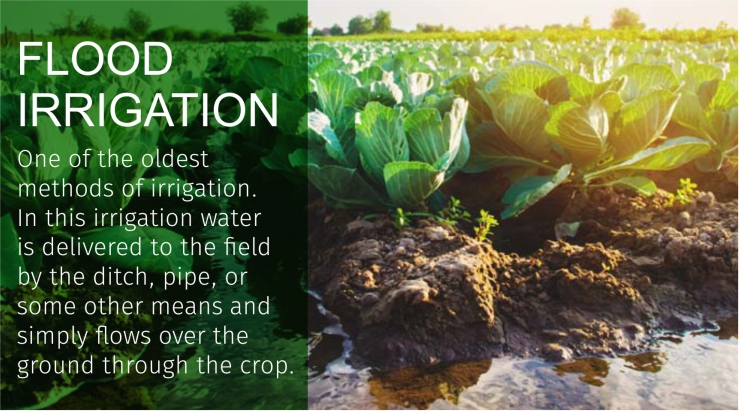
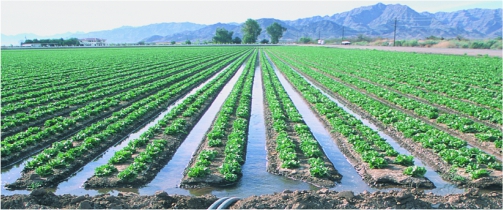
For proper nourishment of crops certain amount of water is required. If rainfall is insufficient there will be deficiency in fulfillment of water requirement. Irrigation tries to remove this deficiency caused due to inadequate rainfall. Thus, irrigation comes to rescue in dry years. Flood or Flood irrigation methods are the oldest, and are those that use the soil Flood to conduct and infiltrate the applied water. Traditionally, the design and operation of Flood irrigation systems are based on experience as well as on historically successful designs. Flood irrigation is the application of water by gravity flow to the Flood of the field. Either the entire field is flooded (basin irrigation) or the water is fed into small channels (furrows) or strips of land (borders).
Flood irrigation is where water is applied and distributed over the soil Flood by gravity. It is by far the most common form of irrigation throughout the world and has been practiced in many areas virtually unchanged for thousands of years. It is widely utilized and therefore a well-known system which can be operated without any high-tech applications. In general, it is more labor intensive than other irrigation methods. Proper design of Flood irrigation systems takes into account the soil type (texture and infiltration rate), slope, and levelness of the field, stream size, and length of run. Leveling the fields and building the water ditches and reservoirs might be expensive, but once this is done, costs are low and the self-help capacity is very high.
HPM Chemicals & Fertilizers Ltd., appointed a special management team which gives knowledge about the irrigation method to the farmers. Training and development videos and e-/web-based learning methodologies about the irrigation, being widely used by our team. Our videos and education drives proves fruitful for the farmers and making them ready for the coming agricultural challanges.